

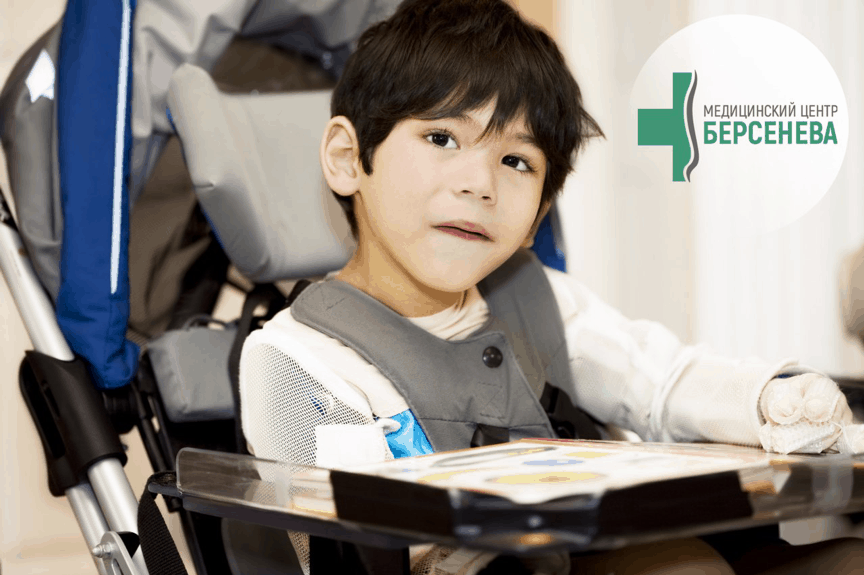
Double hemiplegia is the rarest form of cerebral palsy. It occurs in 1.9% of patients.
- The most common form is spastic diplegia. Usually, motor function is affected, in some children intellectual abilities may suffer as well.
- Hyperkinetic form has a specific symptom – hyperkinesia, or involuntary movements in other words.
- Hemiparetic form is marked by one cerebral hemisphere affection. Consequently, mioparesis has one-sided nature.
- Atonic-astatic form has the following symptoms: hypomiotonia, musculoskeletal system disorders, and imbalance. This is the second most complex form of cerebral palsy after double hemiplegia.
Sometimes symptoms peculiar to several forms are registered in a patient. In this case a mixed form of cerebral palsy is diagnosed. Double hemiplegia is the most complex form of cerebral palsy. This disease is characterized by limb motor impairments and mental disorders. Hands suffer more often than legs, but there are cases of identical lesions. Double hemiplegia can be diagnosed immediately after child’s delivery. Lesions of cortical and subcortical cerebral hemispheres structures lead to disease appearance. As a rule, this happens due to circulatory disorders.
Symptoms of double hemiplegia
As mentioned above, the most characteristic symptom are movement disorders and mental deviations. Let’s examine the symptoms in details:
- speech disorders are registered in 100% of patients. In the most difficult cases, severe dysarthria, anarthria, that is a total absense of verbal skills, are Some children can produce separate wounds and pronounce syllables;
- mental retardation. That is why a child suffering double hemiplegia cannot normally communicate;
- Convulsions are manifested in 45-60% of children;
- Inability to keep balance. Patients cannot stand, walk, and sit;
- Weak limbs sensitivity;
- Sucking and swallowing disorders;
- Dysacusia;
- Absence of complex emotional reactions. A child recognizes parents, meets them happily, reacts adversely to discomfort at the most;
- Microcephaly, that is, no head growth after birth;
- Crossed eyes.
Consequences of double hemiplegia
Most children with this diagnosis are not amenable to learning. The reason is not only low intellectual abilities, but also the lack of motivation sense. Much depends on the environment that surrounds the child and the effort involved. For example, despite severe musculoskeletal disorders a patient suffering from double hemiplegia may learn to sit. Mental deviations do not allow such patients to adapt in society, but they can become partially socialized.
Diagnosis of double hemiplegia
Despite the pronounced symptoms, it is necessary to conduct a multi-level diagnosis, as the cause of double hemiplegia may be a number of central nervous system neurological diseases:
- careful neurological examination using metameric technologies;
- Brain and cervical MRI;
- CT (computed tomography) scan;
- It is aimed at muscle activity level detection;
- Head and neck vessels ultrasound investigation;
- Eyesight and hearing
Treatment of double hemiplegia
As with other forms of cerebral palsy, the earlier you start the treatment, the more favorable prognosis will be. Therapy is chosen individually for each patient, since the disease cause and age are very important. Therefore, self-medication will not bring any result.
Doctors use the following methods:
- vitamin therapy;
- medications aimed at motor activity rehabilitation;
- neuroprotectors;
- antioxidants;
- massage therapy;
- physical therapy;
Metameric method of treatment has proved its effectiveness. This is a point influence on the affected areas, which restores trophic, sensory and motor functions. The principal of method consists in small dosage injections of medication. The needle, entering under the skin, activates the reflexes, and the medication potentiates the therapeutic effect. The medicines we use consist of nerve cells and amino acids.


 by bus No. 7 (on weekdays)
 by bus No. 181
 by trolleybus No. 6, 16, 18