


Spastic diplegia is the most common form of cerebral palsy. It is diagnosed in 40% of patients, mainly in babies born prematurely. Disorders of the arms and legs are most characteristic of the disease, that is, tetraparesis is observed, but the legs suffer more than the hands. About half of the patients have intellectual disabilities, although they are much less pronounced than, for example, with double hemiplegia.
This form is also called Little’s disease. It was this obstetrician who discovered the disease in 1853.
This form is most favorable to the possibility of social adaptation.
About a quarter of patients subsequently acquire the ability to walk and service them. About 50% can move around with the help of other people or devices, but they also write, read, speak and serve themselves on their own.
Much depends on the severity of the disease. For example, mild spastic diplegia outwardly looks like clumsiness.
Causes of spastic diplegia
- Early detachment of the placenta, incompatibility of the blood of the mother and the fetus, abnormalities of the uterus, diseases of the mother, such as diabetes, gestosis, and renal pathology lead to premature birth.
- Birth injury. They can be applied to the fetus during a prolonged or rapid delivery, an excessively narrow pelvis. As a rule, birth injuries are the result of a violation of intrauterine development.
- Asphyxia of the fetus. Hypoxia during pregnancy and childbirth.
- Toxic effects on the fetus. Spastic diplegia occurs due to the abuse of alcohol, drugs; nicotine by the mother, as well as the appearance of the disease can lead to the use of medications that are prohibited to pregnant women.
The hereditary also affects. In sick people, the chances of having a healthy baby are little.
Spastic diplegia: symptoms
The medical history of cerebral palsy spastic diplegia may vary depending on the severity and nature of the brain lesions.
- Mild illness. The first 6 months, the development of the baby may go well. In the future, the activity of the legs decreases. Hands function fully. The patient may move independently in the future; intellectual abilities are not impaired.
- Cerebral palsy spastic diplegia of moderate severity. Pronounced violations of the legs make it difficult to move. The patient can walk with a stick, crutches, or other devices. Mental state and intelligence suffer slightly. The child can be socialized in the future.
- Severe spastic diplegia. Symptoms manifest from the first days of life. Severe disruption of all limbs. Partial socialization is possible.
Let’s consider in detail the symptoms of the disease.
- Early age. The child does not raise his head or cannot hold it, is not able to roll over, does not crawl and does not try to do this, does not know how to stand on his feet at an age sufficient for this. In addition, suspicion should be caused by weakness of the hands, lack of desire to use them. Unlike the hemiparetic form, when one side of the body suffers, spastic depletion disrupts the work of both arms and legs.
- Age of 1 year and older. Difficulties in walking, slowness, fatigue, delays in the process of learning letters and reading, speech impairment. In severe cases, hearing loss, strabismus, hoarseness, disturbances of the swallowing reflex, and a mild form of oligophrenia join in. Infrequently, patients experience convulsions, involuntary movements, but not to the same extent as, for example, with the hyperkinetic form of cerebral palsy.
A mild form of the disease can manifest itself late and develop slowly; therefore it is important to consult a specialist if you detect the slightest symptoms.
Diagnosis of spastic diplegia
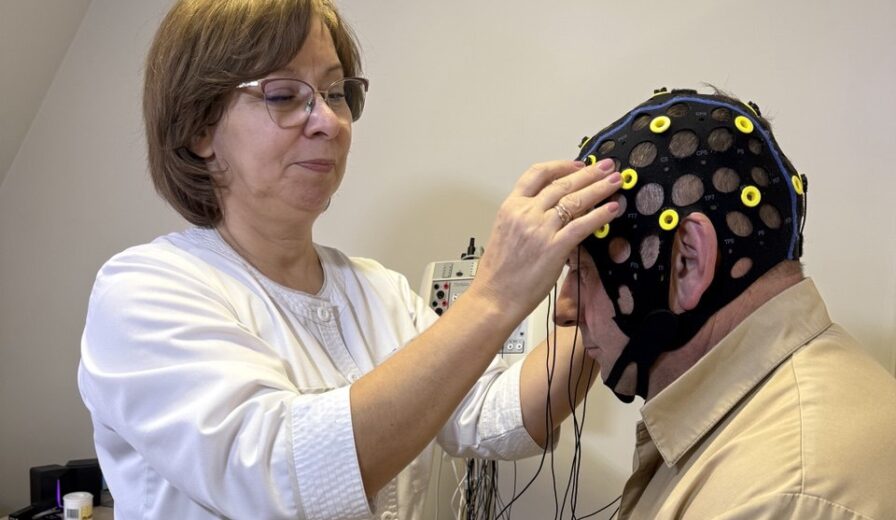
Diagnosis is a comprehensive examination of the child. We study not only the history of the disease in neurology of cerebral palsy of spastic diplegia; Ophthalmological and otolaryngological examinations are used: an examination is made for the presence of hearing and visual impairment
The specialist studies the history of pregnancy, conducts a neurological examination of the patient, often using metameric techniques.
In addition, the following diagnostic measures are implemented:
- CT
- MRI of the brain;
- Sometimes electroneuromyography. Used to exclude muscle diseases;
- Ultrasound of head and neck vessels;
- mental diagnosis. At an earlier age, it is performed by a neurologist, works out the therapy.
Spastic diplegia: treatment
Therapy includes measures aimed at preventing the development of the disease, improving the quality of life, accelerating socialization, and teaching skills.
Used medication. Prescribed drugs that reduce muscle spasticity improve brain function, accelerate cerebral circulation.
Mandatory item is physiotherapy at cerebral palsy spastic diplegia. Its features depend on the physiological characteristics of the child, the severity and course of the disease. A set of exercises for cerebral palsy spastic diplegia consists of active and passive exercises. Passive exercise therapy is the impact on the patient’s body by a specialist. The second option is the impact of a working limb on a non-working one. Children are assigned to work on simulators. This exercise keeps the muscles in good shape and minimizes the risk of developing the disease. Massage is also applied.
In case of speech impairment, a speech therapist and psychiatrist are involved with the child.
Metameric treatment methods are actively used. The main treatment consists in injecting certain parts of the body. The patient’s body is fed by nerve cells, which are part of the injected drugs, as well as amino acids. The needle, in turn, activates reflexes. In most cases, metameric types of massages are used.
Cerebral palsy spastic diplegia treatment is a long and difficult process. However, with the right therapy, it is possible to carry out a systematic socialization of the child and raise his standard of living to the maximum possible level. This form is much better treatable than some others. The main thing is to start therapy on time.


 by bus No. 7 (on weekdays)
 by bus No. 181
 by trolleybus No. 6, 16, 18