

This form of cerebral palsy has several names: atonic, atonic-astatic, ataxic. Along with double hemiplegia, it is one of the rarest and most difficult forms of treatment.

This form of cerebral palsy is observed with a predominant lesion of the cerebellum and cerebellar tract as a result of birth trauma, hypoxic-ischemic effects, or congenital malformations. Also, this form of cerebral palsy can occur with damage to the cerebral cortex (namely, the frontal lobe).
Cerebral palsy atonic form: symptoms
- Decreased muscle tone (muscle lethargy).
- Pronounced tendon reflexes: instant muscle contraction after stretching.
- Impaired coordination.
- Abnormal movements: for example, when a child wants to take an object, he opens his hand wide and closes it later than necessary.
- As with spastic diplegia, speech disorders are often observed: it can be slurred or completely absent.
- Cramps, tremors.
- Manifestations of unjustified aggression.
- Intellectual abnormalities: developmental delays, in the worst cases – oligophrenia
Despite the fact that this is a serious disease, if the child has cerebral palsy with an atonic-astatic form in the mild degree, it is difficult, but amenable to training. Thus, with the right approach, it is possible to achieve certain results in socialization.
Children with this diagnosis are given difficult training in vestibular skills. In this regard, the prognosis is worse than in the case of hyperkinetic and hemiparetic forms. It is difficult for the patient to learn to walk and stand. In severe cases, the child cannot learn to walk at all. With a moderate form of the disease, walking skills appear at 6-7 years. At the same time, the gait is uncertain, sluggish. The feeling of risk of falling makes the patient perform many unnecessary actions. Muscles are constantly tensed.
Most often, children with an atonic-astatic form of cerebral palsy begin to sit unaided only at the age of 1.5 years. The lack of a sense of balance does not allow the patient to properly learn the simplest actions: for example, self-eating, seizing objects.
Diagnosis of atonic cerebral palsy
The difficulty in diagnosing this form of cerebral palsy is that many other diseases can be “masked” under it: for example, those associated with the vestibular apparatus, speech, and mental development. Most often, the diagnosis of cerebral palsy, atonic-astatic form is established by 3-4 years of a child’s life.
Diagnosis begins with a history. A survey of parents is conducted regarding the course of pregnancy and the features of the postpartum period. Specialists examine the child through the use of neurological, metameric techniques.
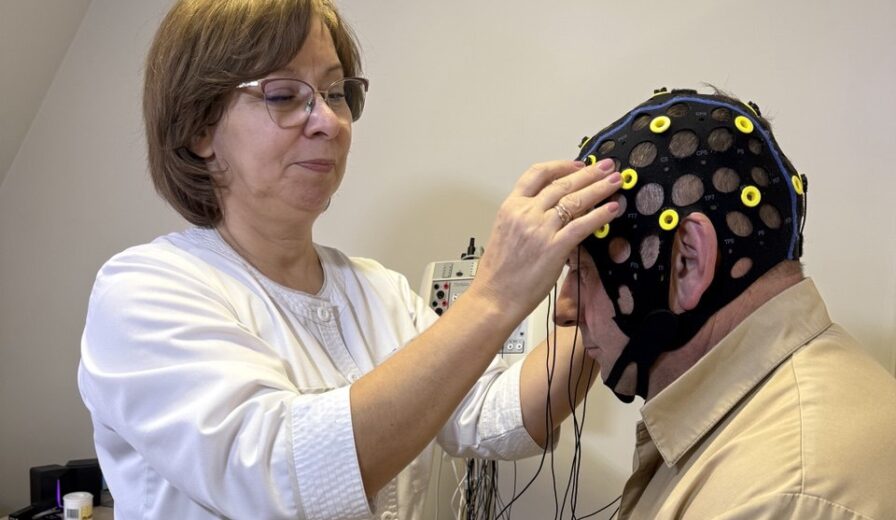
The doctor determines if only the cerebellum or the frontal lobes of the brain are damaged. For this, an MRI, CT, ultrasound of the vessels of the head and brain is performed.
Depending on the degree of damage, a specialist works out the therapy.
Cerebral palsy atonic-astatic form: treatment
A mandatory part of treatment is the effect on the muscles. It is a classic and acupressure. Acupuncture is prescribed for some children. Physiotherapy exercises favorably affect the patient’s condition if he is able to move independently.
Drug treatment is used. Children are prescribed medicine that improve the condition of the muscles, increase their tone, eliminate cramps, if any. Some specialists resort to hippotherapy. Horseback riding has a positive effect on muscles and on keeping the body in balance.
Metameric treatment method has proven its effectiveness. The basis of metamer technologies is the combination of acupuncture of gradient zones (zones of maximum biological activity) of the affected metamer with the simultaneous administration of drugs with neuroprotective and neuroregenerative effects.
The effect of treatment is enhanced by metameric massage, the essence of which is the effect on certain areas on the body. Metamer therapy is developed strictly individually for each patient. An individual approach is the key to success in this case.
With the right approach to diagnosis and therapy, the negative impact of the disease on the child can be reduced. The main thing is to detect the disease on time and consult a specialist immediately. In order not to miss precious time, it is recommended to undergo preventive examinations by a pediatric neurologist.


 by bus No. 7 (on weekdays)
 by bus No. 181
 by trolleybus No. 6, 16, 18