


The brain needs a constant supply of blood, which brings oxygen and nutrients to it. The nutrition of each nerve cell (neuron) is provided by many large vessels and small capillaries from two arterial systems (the pool of internal carotid arteries and vertebral arteries). Maintaining adequate blood flow in the brain in violation of blood circulation in one of the arteries is due to the system of compounds that form the arterial circle of the large brain. However, if blood circulation is disturbed in several arteries, the compensation possibilities are reduced, and the tissues suffer from hypoxia, which leads to brain dysfunction.
Causes of circulatory disorders may be vascular (atherosclerosis, arterial hypertension or hypotension, diabetic vascular pathology, etc.) and extravascular. The most important extravascular factor in the development of circulatory disorders in the vertebral arteries basin is extravascular compression in cervical spine spondylosis, osteochondrosis, and extensor subluxation of the cervical vertebrae articular processes, intervertebral discs hernias, and cervical vertebrae instability (displacement).
Almost always, the development of chronic cerebrovascular accident is a consequence of several causes, so the treatment approach should be complex with the impact on all pathogenetic links of disease.
The criteria for the initial manifestations of chronic cerebral circulatory disorders are the presence of two or more symptoms that recur at least once a week for at least 3 months: memory loss, headache, dizziness, head noises, performance decrement, increased irritability, sleep disorders.
Further, as the disease progresses, dyscirculatory encephalopathy is formed. At first, signs of dyscirculatory encephalopathy are invisible. The work of dead brain cells take over their neighbors. Thus, nervous system can compensate for the loss. But over time, the brain destruction becomes more extensive, and the manifestations of the disease become more noticeable.
Symptoms of dyscirculatory encephalopathy:
- There are no pain receptors in the brain itself, but there are many of them in the meninges and in the capillaries. Therefore, when capillaries suffer, we experience unpleasant sensations, pain and a feeling of bursting.
- Weakness and rapid fatigue, tinnitus, mood swings, sleep disturbances, daytime sleepiness indicate changes in the subcortical layer of the brain.
- Impairment of memory, dispersion of attention, difficulty in drawing up an action plan and presenting the final result of this action reflect the impairments of the cortical centers of the brain.
- Impulsive behaviour, excessive emotionality, attacks of causeless laughter, hysterics. The patient has apathy, indifference and unwillingness to do anything, depression. The situation worsens due to the fact that a person is not able to do his job and serve himself in everyday life.
- Visual impairment. Moreover, this process is uneven. For example, the right eye can see normally, and the left one – as in a fog. Dark spots may appear before eyes.
- The gait changes. It becomes shaky and unstable, sometimes constrained.
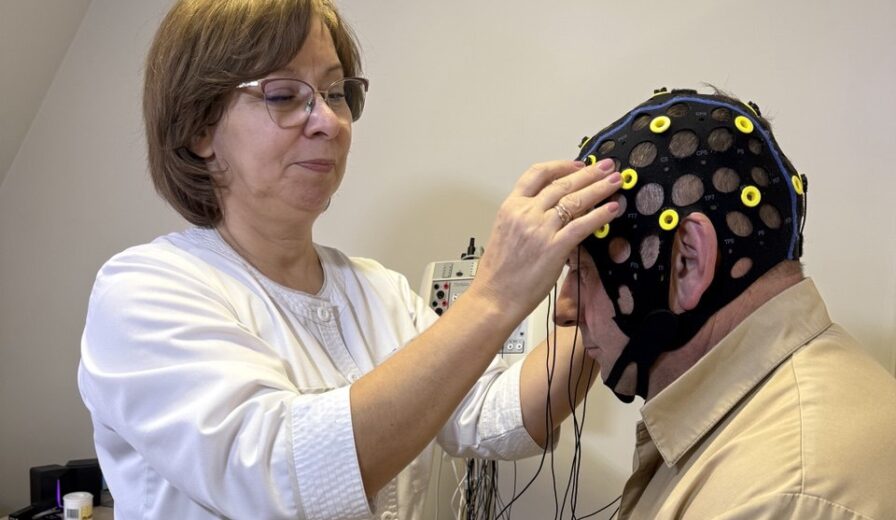
If one or more of the above symptoms appear, it is necessary to consult a neurologist. A thorough neurological examination makes it possible to determine the pool of arteries, where blood circulation is predominantly impaired, as well as the possible causes and stage of the pathological process. Additional diagnostic methods, such as lipid profile, coagulation profile, cardiogram, neck and head vessels examination, electroencephalography, ophthalmic fundus examination, and brain and cervical spine MRI are important in the diagnosis.
The treatment of chronic cerebrovascular disturbance should be complex taking into account all possible causes and stages of the process. At the “Bersenev’s Medical Centre” we apply metameric method of treatment, which is aimed at normalizing the brain blood circulation, improving venous outflow, as well as cervical spine condition.
Fixing an appointment at the “Bersenev’s Medical Centre” is conducted by prior registration in the contact centre (044) 238-22-31. Our operators will help you to find time for the first consultation and answer all your questions.


 by bus No. 7 (on weekdays)
 by bus No. 181
 by trolleybus No. 6, 16, 18